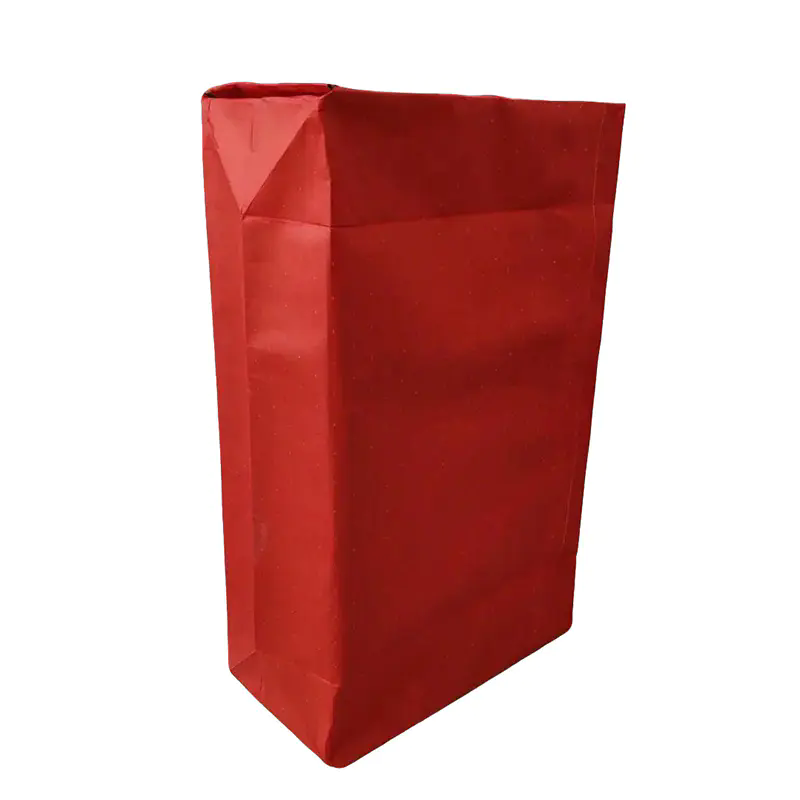
Moisture can quickly affect the quality of putty powder, causing caking, poor flowability and application problems. At Chenxing Packaging, we manufacture Putty Powder Paper Valve Bags using three layers of high-strength kraft paper and an inner PE film liner. This structure helps limit moisture penetration while maintaining the strength required for 20–25 kg packaging, automatic filling and long-distance transportation. In this article, we explain how the bag structure, liner design and valve closure work together to protect dry construction materials during storage and distribution.
Table of Contents
Moisture is one of the main challenges in packaging dry construction materials. Wall putty, skim coat and tile adhesive often contain cement, mineral fillers and other powder components that can absorb moisture during storage. Once humidity enters the package, the powder may develop lumps, lose its free-flowing properties and become difficult to mix evenly at the construction site.
From our manufacturing experience at Chenxing Packaging, we find that the packaging structure plays an important role in controlling this problem. A standard kraft paper bag provides mechanical strength, but paper alone cannot offer the moisture barrier needed for humidity-sensitive powders. That is why we use a PE film liner inside our Putty Powder Paper Valve Bag.
Our standard construction consists of three layers of high-strength kraft paper combined with one inner PE film layer. The kraft paper provides tensile strength and resistance to handling damage, while the polyethylene liner acts as a barrier that slows moisture vapor from entering the package.
This combination is particularly useful when putty powder needs to travel through humid ports, remain in warehouses for extended periods or be shipped in sea containers across different climates.
However, we do not treat a PE liner as a guarantee of complete waterproofing. The actual moisture protection depends on film thickness, seam and bottom construction, valve design, storage conditions and the integrity of the finished bag.
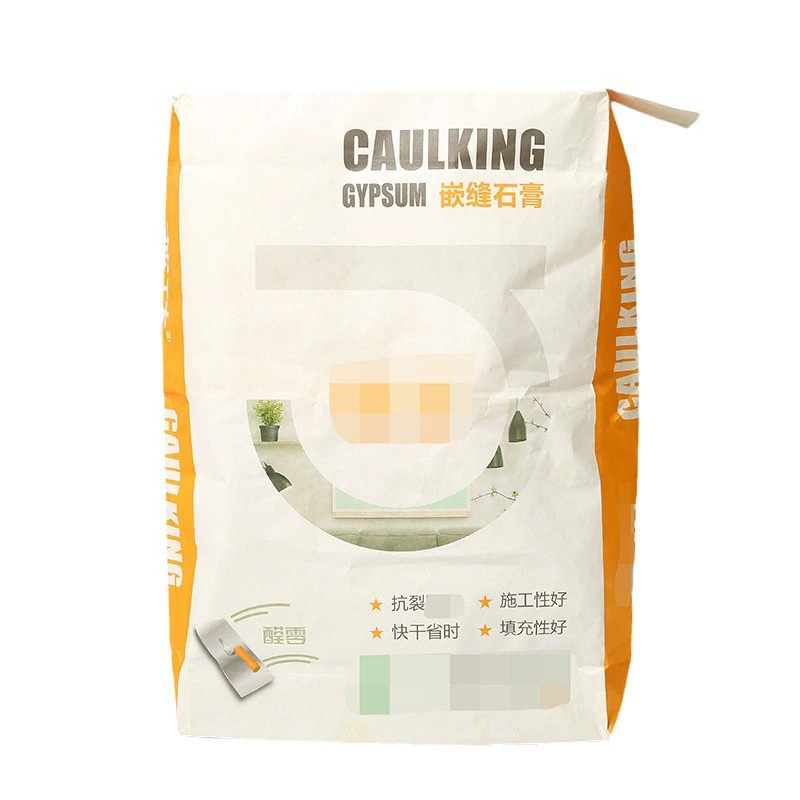
The inner polyethylene film is the main moisture-control component of our paper valve bag. Unlike kraft paper, which naturally allows moisture vapor to pass through to some extent, PE film provides a more effective barrier between the powder and the surrounding environment.
For putty powder packaging, this difference matters during both storage and transportation. Even when bags are stacked on pallets inside a warehouse, they may be exposed to changing temperatures, humid air and condensation risks. An inner PE liner helps reduce the amount of moisture reaching the packaged material.
We combine the PE liner with three kraft paper plies rather than relying on a single plastic bag. This gives the packaging two different functions: the paper layers carry the mechanical load, while the inner film provides additional protection against moisture penetration.
When developing a custom bag, we pay attention to several details:
For customers handling moisture-sensitive dry-mix products, we recommend confirming the liner specification and testing the finished bag under the expected storage and transportation conditions before mass production.
Moisture resistance is only one part of industrial powder packaging. A bag filled with 25 kg of wall putty must also withstand filling pressure, stacking loads, handling and transportation. If the paper structure is too weak, the bag may tear or burst even when its moisture barrier is adequate.
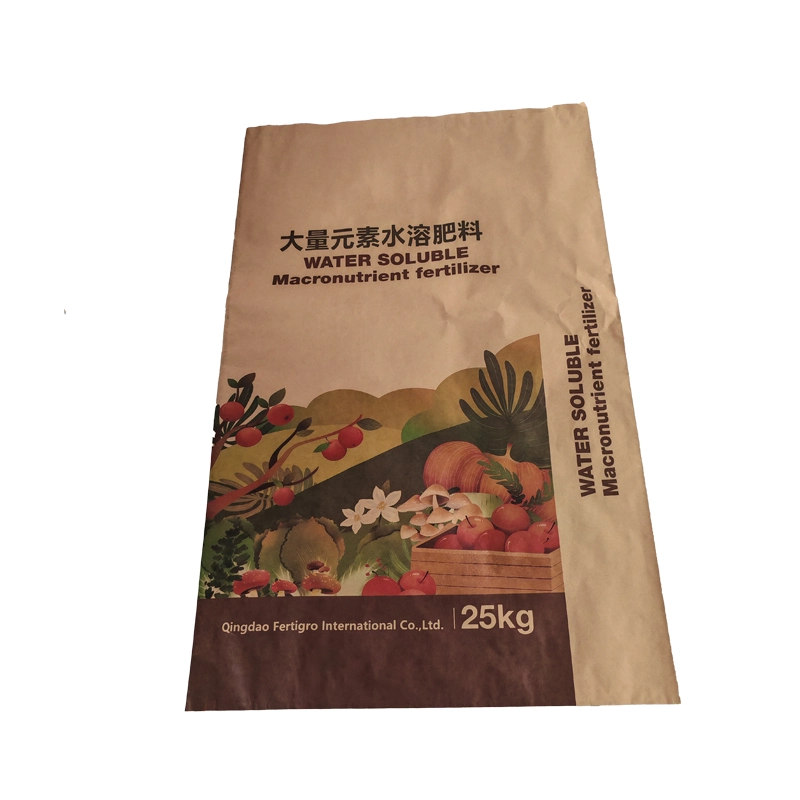
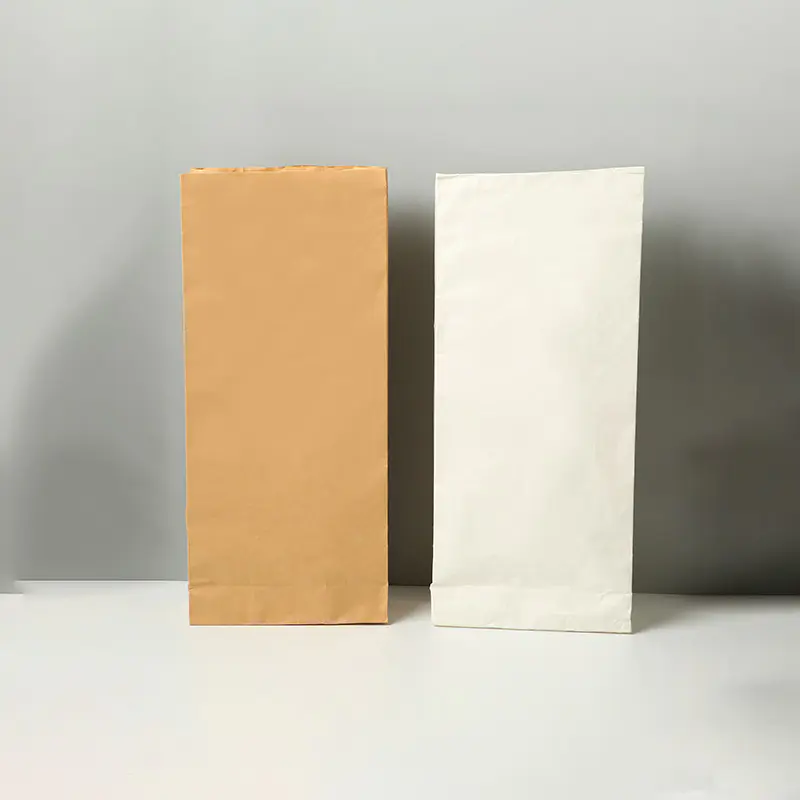
Our Putty Powder Paper Valve Bag uses three kraft paper layers, with a customizable grammage of 70–110 gsm per ply. The combined paper structure provides the strength needed for heavy powder packaging while maintaining a practical surface for product printing.
Each layer contributes to the overall performance of the bag. The outer kraft paper protects the package during handling and provides a printable surface. The middle paper layer adds structural strength. The inner paper layer supports the packaging structure around the PE film liner.
We adjust paper grammage according to the filling weight, powder characteristics and required handling performance rather than simply increasing paper thickness. A 20 kg bag and a 25 kg bag may require different material combinations depending on the bulk density and filling conditions of the product.
| Packaging Component | Main Function | Practical Benefit |
|---|---|---|
| Outer Kraft Paper | Surface protection and printing | Improves handling durability and brand presentation |
| Middle Kraft Paper | Structural reinforcement | Helps withstand stacking and transportation loads |
| Inner Kraft Paper | Supports the multi-wall construction | Provides additional protection around the liner |
| PE Film Liner | Moisture barrier | Helps reduce moisture penetration and powder caking |
The pasted square-bottom structure is another important detail. After filling, the bag forms a stable rectangular shape that stands upright on pallets. This makes stacking more consistent and helps reduce unnecessary movement during warehouse handling and truck transportation.
A moisture-resistant liner cannot solve every packaging problem if the filling and closing process is poorly designed. For this reason, we also pay attention to the valve structure and the way the bag works with automatic filling equipment.
Our paper valve bags are available with internal or external self-closing valves. During filling, the valve sleeve fits over the filling nozzle, allowing the powder to enter the bag without opening the entire top. Once filling is complete, the product pressure and valve construction help close the opening.
This design removes the need for conventional top stitching or a separate heat-sealing step in compatible filling systems. It also helps reduce powder leakage around the filling station.
Another important feature is air release. Fine powder entering a bag carries air with it. If the air cannot escape efficiently, the bag may become difficult to fill completely, develop an uneven shape or create problems during pallet stacking.
We use controlled micro-perforations in the paper structure to support air evacuation during filling. The perforation arrangement needs to be balanced with the PE liner design. Uncontrolled holes through the moisture barrier could compromise its protective function, so the venting structure should be matched to the filling system and required barrier performance.
For manufacturers running semi-automatic or automatic packing lines, we recommend confirming the valve dimensions, nozzle compatibility and filling speed before approving the final bag design.
Even a well-designed moisture-resistant paper bag needs proper handling after filling. In our experience, packaging performance depends not only on material selection but also on how finished bags are stored, stacked and transported.
For wall putty and tile adhesive manufacturers shipping products over long distances, we recommend paying attention to the following points:
Our bags can be supplied in bulk bales or palletized packaging to suit different shipping arrangements. Standard packaging options include 500 pieces per bale or 5,000 pieces per pallet.
For sea freight, we particularly recommend checking the condition of the container before loading. A PE-lined paper bag helps reduce moisture penetration through its packaging structure, but it cannot prevent damage caused by direct water exposure, container leaks or severe condensation.
At Chenxing Packaging, we customize paper valve bags according to filling weight, powder bulk density, filling equipment and printing requirements. The following table shows the main specifications of our standard product configuration.
| Item | Specification |
|---|---|
| Product Name | Putty Powder Paper Valve Bag |
| Material | 3-ply kraft paper + 1-ply PE film liner |
| Paper Grammage | 70–110 gsm per ply, customizable |
| Valve Type | Internal valve or external valve, self-closing |
| Bottom Structure | Pasted square bottom / block bottom |
| Filling Weight | 20 kg / 25 kg, customizable |
| Bag Size | Customized according to filling weight and bulk density |
| Printing | Flexographic or offset printing, one or two sides |
| Main Features | Moisture barrier, controlled air release, stable stacking and high-speed valve filling |
| Applications | Wall putty, skim coat, tile adhesive, dry-mix mortar and gypsum powder |
| MOQ | 10,000 pcs per design for the standard product configuration |
| Samples | Free stock samples, freight collect; custom samples subject to project requirements |
| Custom Sample Lead Time | Approximately 5–7 days |
| Mass Production Lead Time | Approximately 30 days after order confirmation and printing plate approval |
| Packaging | 500 pcs/bale or 5,000 pcs/pallet |
| Trade Term | FOB Ningbo, China |
| Customization | OEM and ODM accepted |
For customers who need a smaller trial order, we can also discuss flexible MOQ arrangements. Chenxing Packaging supports trial quantities starting from 1,000 pieces for suitable projects, depending on the bag construction, printing requirements and production schedule. The final MOQ should be confirmed before artwork and production planning.
Although this bag is primarily designed for putty powder, its multi-wall kraft paper structure and PE film liner make it suitable for several other dry construction materials. The key is to match the bag dimensions, paper strength and valve configuration to the product's density and filling behavior.
Wall putty is used for surface preparation before painting. It is often supplied in 20 kg or 25 kg packages. Because moisture can cause powder caking and make mixing more difficult, a PE-lined kraft paper bag provides an additional layer of protection during storage and distribution.
Tile adhesive contains cementitious materials and other functional ingredients. Moisture exposure before use can affect its powder condition and application performance. Our multi-layer paper valve bags provide mechanical support and a moisture barrier for this type of dry-mix product.
Skim coat and gypsum-based products require packaging that can handle fine powders without excessive dust leakage. The valve filling structure allows the bags to work with compatible powder-filling equipment while the square bottom improves pallet stacking.
Dry-mix mortar and calcium carbonate are commonly supplied in bulk industrial packaging. Their different bulk densities and flow characteristics mean that bag size, paper grammage and filling weight should be selected according to the actual product rather than using one universal specification.
At Chenxing Packaging, we have more than eight years of experience in paper packaging production. We understand that industrial packaging must do more than carry a product. It needs to work with filling equipment, protect the contents during transportation and maintain consistent quality across production batches.
Our factory is equipped with fully automated German and Japanese printing lines, supported by a five-point quality inspection system. For customized paper valve bags, we focus on printing consistency, material specifications, bag dimensions, pasting quality and finished product appearance.
We also understand the importance of confirming samples before mass production. We provide visual sample approval so that customers can check the printing layout, colors and overall bag appearance before production begins.
For our packaging projects, we maintain a 95% on-schedule delivery rate and support flexible production arrangements for suitable trial orders. Whether the requirement is a 20 kg putty powder bag or a customized 25 kg valve sack for tile adhesive, we can discuss the material structure, printing artwork and packaging details according to the production requirements.
Our aim is to provide practical packaging solutions that balance material performance, production efficiency and transportation requirements.
Yes. The inner PE film acts as a moisture barrier and helps reduce moisture penetration into the bag. However, the actual protection depends on film integrity, valve and seam construction, storage conditions and exposure time. The bag should not be treated as completely waterproof.
A regular kraft paper valve bag mainly relies on its paper layers for strength and packaging protection. A PE-lined version adds an inner polyethylene film that improves resistance to moisture penetration. For moisture-sensitive products such as wall putty and tile adhesive, the additional liner is an important packaging consideration.
Yes. Our bags are designed for compatible semi-automatic and automatic valve filling systems. We offer internal and external valve options and recommend confirming the valve dimensions and nozzle requirements before production.
Yes. We offer 70–110 gsm kraft paper per ply, with bag dimensions and material combinations customized according to filling weight, powder bulk density and handling requirements. We can also customize printing on one or both sides.
Our standard MOQ is 10,000 pieces per design, covering one set of printing plates. For suitable trial projects, we can discuss quantities starting from 1,000 pieces depending on the bag structure, artwork and production arrangements.
Yes. We provide free stock samples, with courier freight collected from the customer. Custom samples based on your printing artwork generally take 5–7 days, depending on the sample requirements.
The first container is generally ready within approximately 30 days after order confirmation and printing plate approval. The actual schedule depends on the order quantity, material availability and customization requirements.
We recommend storing empty bags in a dry, covered warehouse, away from direct sunlight, water and excessive humidity. Keep the bags properly packaged until use to protect the paper layers and PE liner from damage.
Preventing moisture damage in putty powder packaging requires more than choosing a strong outer bag. The inner barrier, paper construction, valve closure and storage conditions all contribute to the final packaging performance.
By combining three layers of kraft paper with an inner PE film liner, our Putty Powder Paper Valve Bag provides a practical packaging option for wall putty, tile adhesive, skim coat and other dry construction materials. Its self-closing valve and pasted square bottom also support efficient filling and stable pallet stacking.
At Chenxing Packaging, we focus on matching bag specifications to actual production and transportation requirements. If you are developing a new packaging project, you can contact our team to discuss the required bag size, paper grammage, valve type, printing design and filling weight.