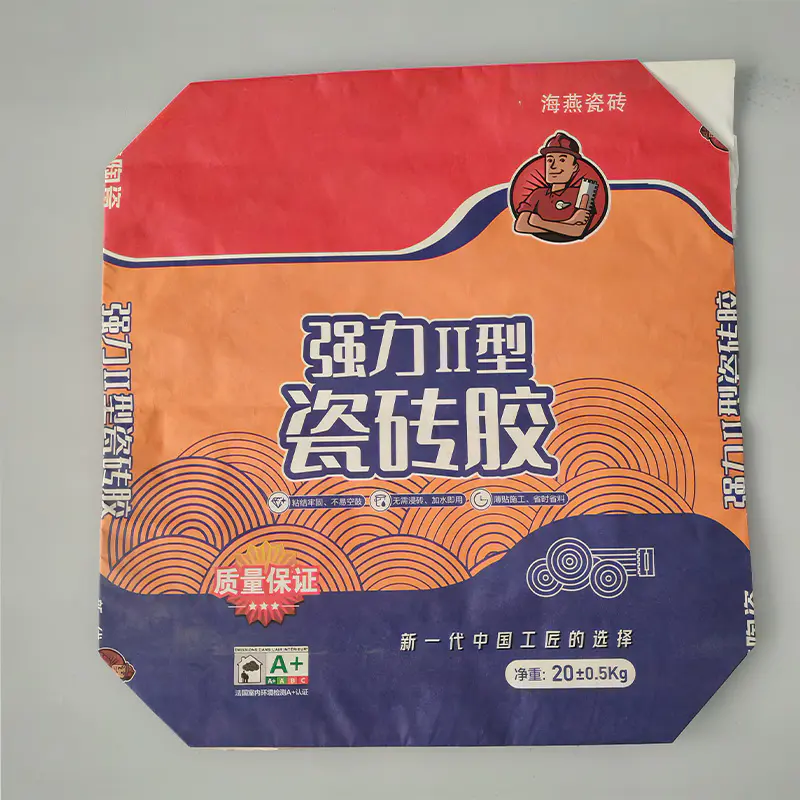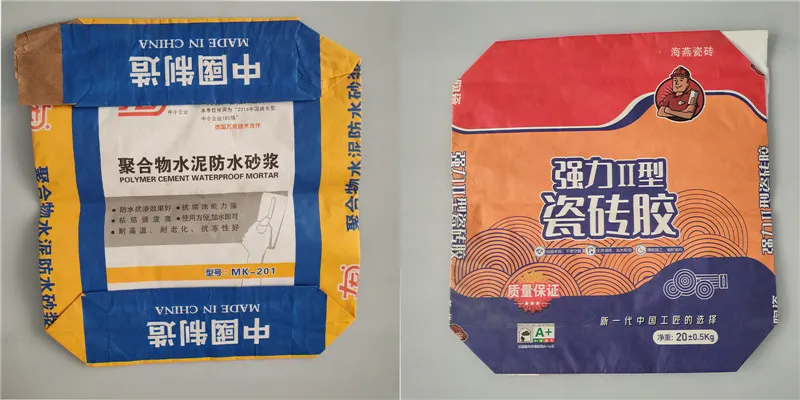
A procurement manager for a cement manufacturer is evaluating a new supplier of Valve Mouth Paper Bags. The current supplier's bags have performed adequately, but the manufacturer is expanding into a humid coastal market, and the existing bags are showing signs of moisture ingress during transit. The cement is not a food product, but moisture can cause caking, hardening, and loss of flowability, which leads to customer complaints and rejected shipments. The procurement manager needs to understand what moisture protection levels are available in Valve Mouth Paper Bags and how to specify the right level for the new market. This is not a simple question, because moisture protection is not a single feature. It is a spectrum of options, from basic paper-only bags to multi-layer barriers with polyethylene or foil liners. Each option offers a different level of protection at a different cost.
This guide is written for buyers who need to specify moisture protection for Valve Mouth Paper Bags. We will explain how moisture protection works, the different liner and coating options available, the levels of protection they provide, the test methods used to measure moisture resistance, and the criteria for selecting the right option for your product. We will also provide detailed product parameters from our factory at Wenzhou Chenxing Packaging Co., Ltd. Whether you are packaging cement, chemicals, food ingredients, or agricultural products, this guide will help you make an informed decision that protects your product and your reputation.
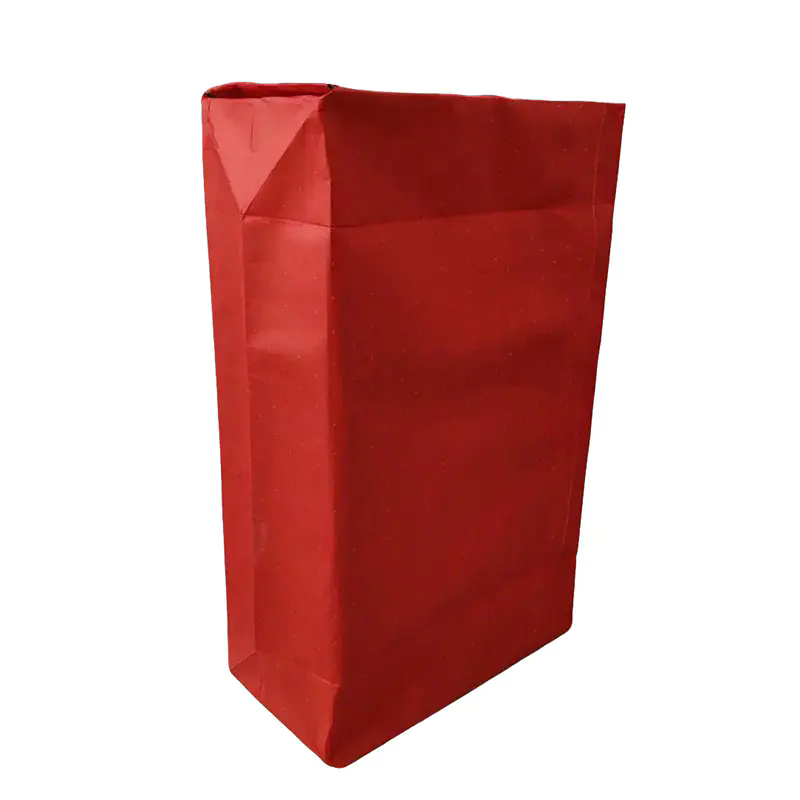
Paper is a hygroscopic material. It absorbs moisture from the air and from the product it contains. When a Valve Mouth Paper Bag absorbs moisture, it loses strength, becomes susceptible to mold and mildew, and can transfer moisture to the product inside. For products that are sensitive to moisture, such as cement, powdered chemicals, and food ingredients, this can lead to caking, degradation, and spoilage. The moisture can come from several sources: the ambient humidity during storage and transportation, the moisture content of the product itself, and the moisture in the air that is trapped inside the bag during filling. The valve mouth paper bag must provide a barrier that prevents or slows the migration of moisture from the environment to the product. The level of protection required depends on the product's sensitivity to moisture and the expected environmental conditions. The table below summarizes the factors that affect moisture protection requirements.
| Factor | Impact on Moisture Protection Requirement |
| Product Sensitivity | Highly sensitive products (e.g., cement, sugar) require higher protection |
| Ambient Humidity | High-humidity climates require higher protection |
| Storage Duration | Longer storage requires higher protection |
| Transport Conditions | Ocean freight and open-air storage require higher protection |
| Product Moisture Content | Higher initial moisture requires higher protection |
At Wenzhou Chenxing Packaging Co., Ltd., our factory manufactures Valve Mouth Paper Bags with a range of moisture protection options. We understand that different products and different markets have different requirements, and we work with our customers to specify the right level of protection for their application.
Valve Mouth Paper Bags are available in four basic levels of moisture protection: standard, water-resistant, moisture-resistant, and moisture-barrier. Each level is achieved through different combinations of paper treatment, liner material, and bag construction. The standard level uses untreated kraft paper. It offers no specific moisture barrier and is suitable for products that are not moisture-sensitive or for dry, short-duration storage. The water-resistant level uses paper that has been treated with a water-repellent coating or a wet-strength resin. This level resists liquid water from rain or splashing but does not provide a significant barrier to water vapor. The moisture-resistant level uses a polyethylene (PE) liner or a PE-coated paper. This level provides a moderate barrier to water vapor and is suitable for products that are moderately moisture-sensitive, such as fertilizers and some chemicals. The moisture-barrier level uses a foil or metallized film liner, often combined with a PE layer. This level provides the highest barrier to water vapor and is suitable for highly moisture-sensitive products, such as certain food ingredients and pharmaceutical powders. The table below summarizes these levels.
| Protection Level | Construction | Water Vapor Transmission Rate (WVTR) | Typical Application |
| Standard | Untreated kraft paper | High (no barrier) | Non-sensitive products, short storage |
| Water-Resistant | Water-repellent coating or wet-strength resin | Moderate (liquid water resistance) | Products exposed to rain or splashing |
| Moisture-Resistant | PE liner or PE-coated paper | Low to moderate | Fertilizers, chemicals, moderate sensitivity |
| Moisture-Barrier | Foil or metallized film liner + PE | Very low | Food ingredients, pharmaceuticals, high sensitivity |
At our factory, we manufacture Valve Mouth Paper Bags in all four protection levels. We work with our customers to determine the appropriate level based on the product, the environment, and the storage duration. Our technical team can provide guidance on the best option for your specific application.
Polyethylene (PE) liners are the most common method for improving the moisture resistance of Valve Mouth Paper Bags. A PE liner is a thin film of polyethylene that is bonded to the inner surface of the paper bag or inserted as a separate inner bag. The PE film acts as a barrier to water vapor, slowing the rate at which moisture can migrate from the environment to the product. The effectiveness of the barrier depends on the thickness of the PE film, the type of polyethylene (LDPE, LLDPE, or HDPE), and the quality of the bonding. A thicker film provides a better barrier, but it also adds weight and cost. The table below summarizes the typical PE liner options for Valve Mouth Paper Bags.
| Liner Type | Thickness | WVTR (g/m²/day) | Typical Application |
| LDPE Film | 20 - 30 µm | 5 - 10 | General moisture resistance |
| LLDPE Film | 25 - 40 µm | 3 - 8 | Improved moisture resistance |
| HDPE Film | 15 - 25 µm | 4 - 9 | Good moisture resistance, higher strength |
| PE-Coated Paper | 15 - 25 g/m² | 8 - 15 | Integrated moisture resistance |
At Chenxing Packaging, our factory uses high-quality PE liners from reputable suppliers. We offer liners in a range of thicknesses and types to suit different moisture protection requirements. We also offer PE-coated paper, which integrates the moisture barrier into the paper itself, simplifying the bag construction and reducing the risk of liner damage during filling. Our technical team can help you select the right PE liner for your product.
Foil or metallized barriers are necessary when the product is highly sensitive to moisture and the standard PE liner does not provide sufficient protection. Foil liners are made from aluminum foil, often laminated to a PE layer for heat sealability. Metallized film liners are made from a plastic film that has been coated with a thin layer of aluminum. Both types provide an excellent barrier to water vapor, as well as to oxygen and light. They are used for products such as coffee, powdered drink mixes, pharmaceutical powders, and certain chemicals. The choice between foil and metallized film depends on the required barrier level, the cost, and the flexibility of the liner. Foil provides the highest barrier, but it is more expensive and less flexible than metallized film. Metallized film provides a good barrier at a lower cost, but it may not be suitable for the most sensitive products. The table below compares foil and metallized film liners.
| Liner Type | WVTR (g/m²/day) | Oxygen Barrier | Light Barrier | Cost |
| Aluminum Foil | < 0.1 | Excellent | Excellent | High |
| Metallized Film | 0.5 - 2 | Good | Good | Medium |
| PE Liner (for comparison) | 3 - 10 | Poor | Poor | Low |
At our factory, we manufacture Valve Mouth Paper Bags with foil and metallized film liners for the most demanding moisture protection applications. We work with our customers to select the right liner based on the product's sensitivity and the expected storage conditions. Our technical team can provide WVTR data and recommend the appropriate liner for your application.
Moisture protection is measured using the Water Vapor Transmission Rate (WVTR), which is the rate at which water vapor passes through a material under specified conditions of temperature and humidity. WVTR is typically expressed in grams per square meter per day (g/m²/day). A lower WVTR indicates a better moisture barrier. The test is performed according to standards such as ASTM E96 or ISO 2528. When specifying moisture protection for Valve Mouth Paper Bags, the buyer should include the required WVTR in the purchase order, along with the test method and the conditions. The buyer should also specify the liner type, thickness, and any additional requirements, such as heat sealability or puncture resistance. The table below summarizes the specifications that should be included in a purchase order for moisture-protected Valve Mouth Paper Bags.
| Specification | Unit of Measure | Example |
| WVTR | g/m²/day | < 5 g/m²/day |
| Test Method | Standard | ASTM E96 |
| Liner Type | Type | LDPE film |
| Liner Thickness | µm | 30 µm |
| Heat Sealability | Required/Not Required | Required |
| Puncture Resistance | Required/Not Required | Required |
| Bag Construction | Type | 3-ply kraft + PE liner |
At our factory, we work with our customers to ensure that all specifications are clearly defined and understood before production begins. We provide samples and test reports for approval. Our quality control system includes WVTR testing, liner thickness measurement, and heat seal strength testing. Our goal is to deliver Valve Mouth Paper Bags that meet or exceed our customers' moisture protection requirements.
The following table provides the key product parameters for our Valve Mouth Paper Bags with moisture protection. These bags are designed for a range of products, from construction materials to food ingredients. Our factory can also produce custom bags to meet specific requirements.
| Parameter | Specification Range | Notes |
| Bag Construction | 2-ply to 4-ply kraft paper | Selected for strength and protection |
| Liner Type | None, PE, Foil, Metallized Film | Selected for moisture sensitivity |
| WVTR | < 0.1 to 15 g/m²/day | Depends on liner type |
| Liner Thickness | 15 - 40 µm (PE); 7 - 12 µm (Foil) | Selected for barrier and strength |
| Heat Sealability | Yes (for PE and foil liners) | Provides airtight seal |
| Bag Size | Custom | Made to order |
| Valve Type | Standard, Internal, External | Selected for filling equipment |
| Printing | Up to 6 colors | Custom design available |
| MOQ | 10,000 pieces | Negotiable for large orders |
| Lead Time | 3 - 5 weeks | Depends on quantity and customization |
At our factory, we manufacture our Valve Mouth Paper Bags to meet these specifications and more. We can customize the construction, liner type, WVTR, size, valve type, and printing to suit your specific requirements. Our quality control system includes inspection of raw materials, in-process inspection, and final inspection before shipment. Our goal is to provide our customers with high-quality Valve Mouth Paper Bags that protect their products from moisture damage.
Question 1: What is the difference between water-resistant and moisture-resistant valve mouth paper bags?
Answer: Water-resistant Valve Mouth Paper Bags are treated to resist liquid water, such as rain or splashing. They are not designed to provide a significant barrier to water vapor. Moisture-resistant bags use a PE liner or PE-coated paper to provide a moderate barrier to water vapor. They are suitable for products that are moderately sensitive to humidity. The choice depends on whether the primary risk is liquid water or water vapor.
Question 2: How do I know what WVTR level my product requires?
Answer: The required WVTR depends on the product's sensitivity to moisture and the expected storage conditions. As a general guideline, products that are highly sensitive to moisture (e.g., certain food ingredients) require a WVTR of less than 1 g/m²/day. Products with moderate sensitivity (e.g., fertilizers) may be adequately protected by a WVTR of 5-10 g/m²/day. Our technical team can help you determine the appropriate WVTR for your specific product.
Question 3: Can valve mouth paper bags with foil liners be recycled?
Answer: Valve Mouth Paper Bags with foil or metallized film liners are generally not recyclable in standard paper recycling streams because the foil and plastic layers must be separated from the paper. Some specialized recycling facilities can handle these materials, but they are not widely available. If recycling is a priority, PE-lined bags are a better option, as the PE can sometimes be separated from the paper in specialized facilities. We can advise on the recycling options for your specific bag construction.
Question 4: Does the valve itself affect moisture protection?
Answer: Yes, the valve is a potential entry point for moisture. A well-designed valve should close tightly after filling to prevent moisture ingress. Some valves include a sealing membrane or a tight-fitting flap that enhances moisture protection. When specifying a Valve Mouth Paper Bag for moisture-sensitive products, it is important to select a valve design that provides a good seal. Our factory can advise on the best valve type for your application.
Question 5: How does the number of paper plies affect moisture protection?
Answer: The number of paper plies affects the strength and puncture resistance of the bag, but it does not significantly affect moisture protection. Moisture protection is determined by the liner or coating, not by the paper plies. A 2-ply bag with a foil liner can provide better moisture protection than a 4-ply bag with no liner. When specifying moisture protection, focus on the liner type and WVTR, not on the number of plies.
Valve Mouth Paper Bags offer a range of moisture protection levels, from basic untreated paper to advanced foil and metallized film barriers. The right level for your application depends on the product's sensitivity to moisture, the expected environmental conditions, and the storage duration. By understanding the different liner and coating options, the WVTR values they achieve, and the test methods used to measure them, buyers can specify the right level of protection and avoid costly moisture damage. At Wenzhou Chenxing Packaging Co., Ltd., our factory has the expertise and the capability to manufacture Valve Mouth Paper Bags with the full range of moisture protection options. We work closely with our customers to select the best solution for their product. We maintain strict quality control and provide full test reports and material traceability.
Whether you are packaging cement, chemicals, food ingredients, or agricultural products, we invite you to contact us to discuss your requirements. We can provide samples, technical data, and customized solutions. Our commitment to quality and customer satisfaction has made us a trusted partner for businesses around the world.
Contact Wenzhou Chenxing Packaging Co., Ltd. today to discuss your Valve Mouth Paper Bag moisture protection requirements and discover how our bags can protect your products.
-