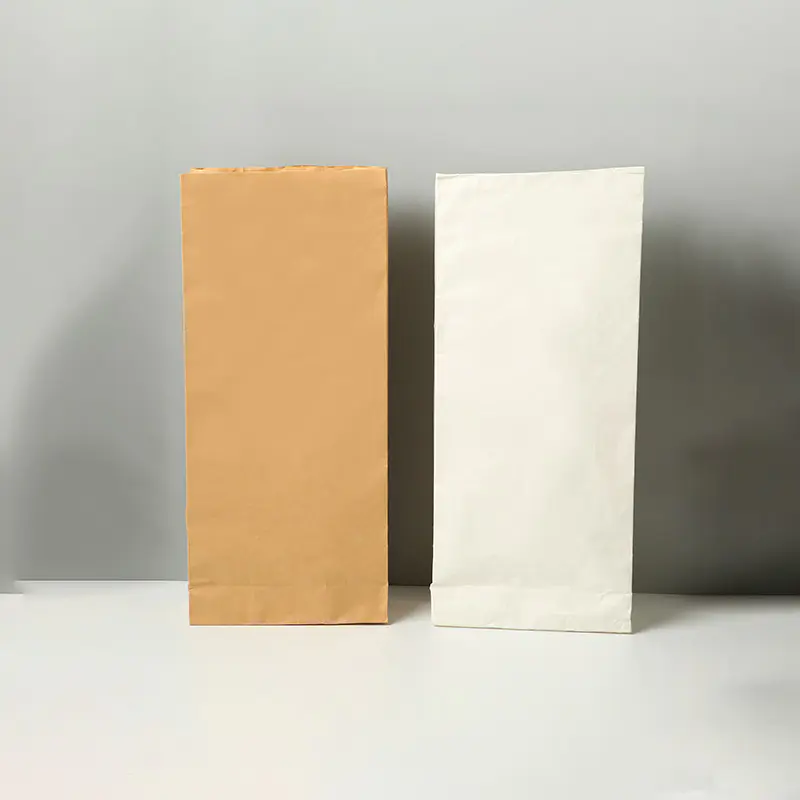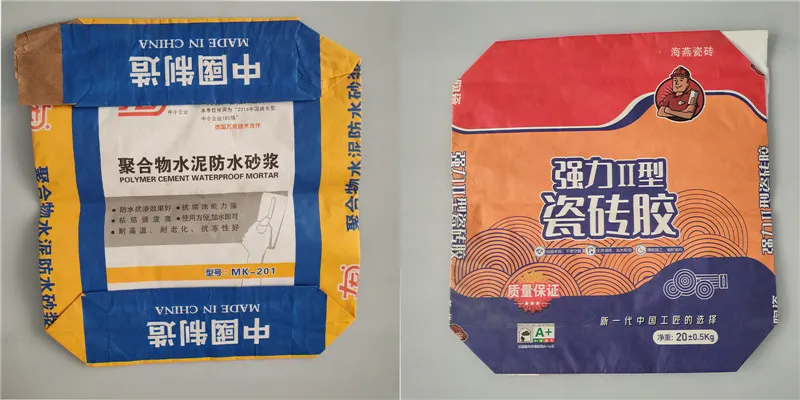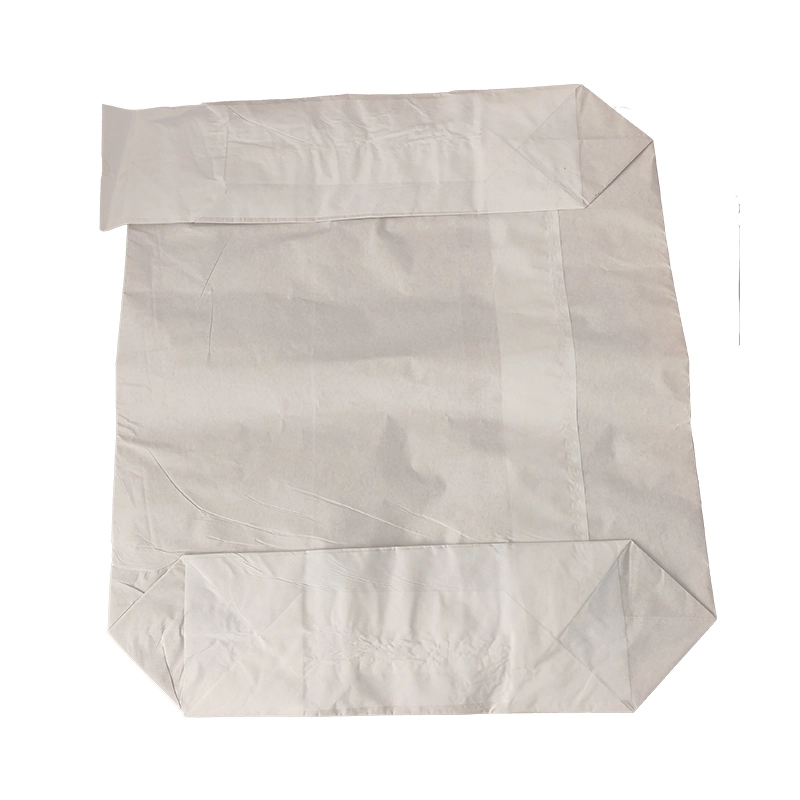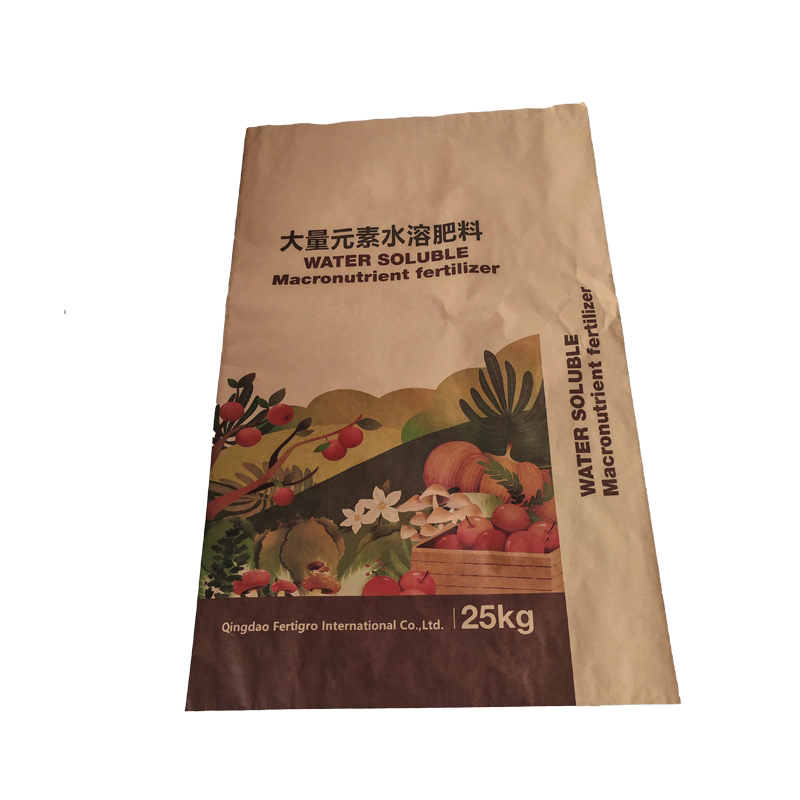
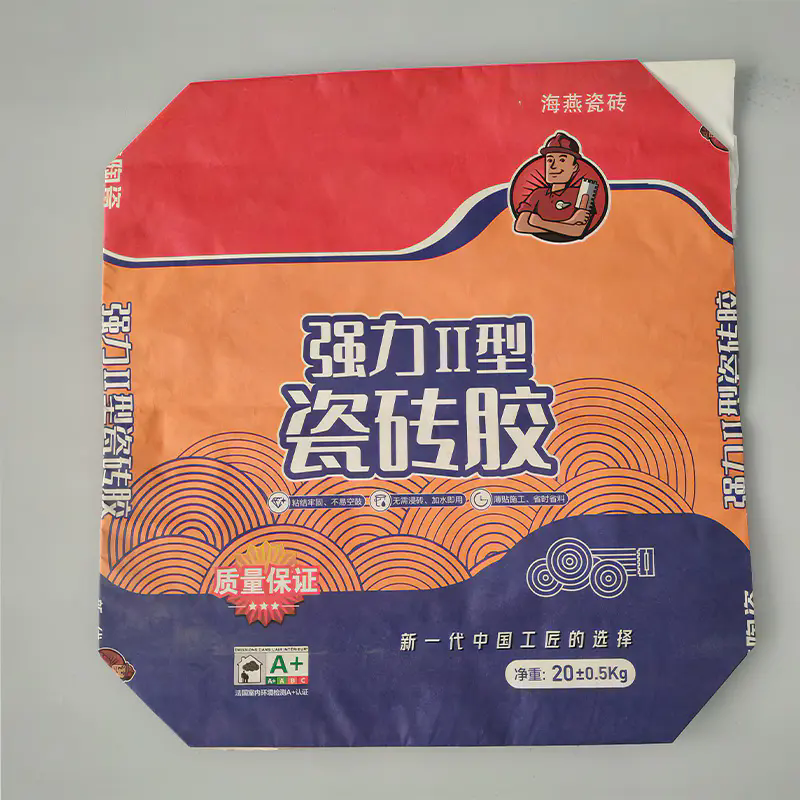
A valve mouth paper bag is a workhorse of industrial packaging. It is used for cement, chemicals, minerals, agricultural products, and food powders. Many of these products are hygroscopic: they absorb moisture from the air, and when they do, they cake, clump, or lose potency. A standard paper bag, even a multi-wall kraft bag, is not a moisture barrier. Paper is porous by nature, and water vapor can pass through it. This is where PE film comes in. A polyethylene film laminated to the paper or used as an inner liner transforms the bag from a simple container into a moisture barrier. For a procurement manager sourcing Valve Mouth Paper Bags for a moisture-sensitive product, understanding how PE film works, how thick it needs to be, and how it is integrated into the bag is essential for protecting the product and avoiding claims.
This guide is written for buyers who need to specify PE film for valve mouth paper bags. We will explain how PE film creates a moisture barrier, the difference between coating and lamination, the film thickness and grade options, the factors that affect barrier performance, and the criteria for evaluating a supplier. We will also provide detailed product parameters from our factory at Wenzhou Chenxing Packaging Co., Ltd. Whether you are packaging cement, sugar, chemicals, or food ingredients, this guide will help you specify a Valve Mouth Paper Bag that keeps moisture out and product quality in.
Moisture control matters in valve mouth paper bags because many of the products packed in them are sensitive to water vapor. Cement, for example, will begin to hydrate if it absorbs moisture from the air, forming lumps that reduce its strength and workability. Sugar and flour will cake and become unusable. Chemical powders may react, degrade, or lose potency. Even products that are not immediately damaged by moisture can suffer from mold growth or corrosion of the packaging itself. The table below summarizes the products that are most sensitive to moisture and the consequences of moisture ingress.
| Product | Moisture Sensitivity | Consequence of Moisture Ingress |
| Cement | High | Hydration, lumping, loss of strength |
| Sugar | High | Caking, hardening, loss of flowability |
| Flour | High | Caking, mold growth, spoilage |
| Chemical powders | Variable | Reaction, degradation, loss of potency |
| Fertilizers | High | Caking, loss of nutrient availability |
At Chenxing Packaging, our factory manufactures Valve Mouth Paper Bags with PE film barriers for moisture-sensitive products. We understand that the barrier is not a luxury; it is a requirement for product quality and customer satisfaction. Our goal is to provide bags that protect the product from moisture ingress during storage and transport.
PE film creates a moisture barrier because polyethylene is a hydrophobic polymer with a low water vapor transmission rate (WVTR). The polymer chains in PE are tightly packed, leaving very little free volume for water molecules to pass through. When a PE film is laminated to the paper or used as an inner liner, it forms a continuous layer that blocks the path of water vapor. The effectiveness of the barrier depends on the film's thickness, its density, and its integrity. A thicker film has a lower WVTR, but it also adds weight and cost. The table below shows the typical WVTR values for different PE film thicknesses.
| Film Thickness (µm) | Typical WVTR (g/m²/day at 38°C, 90% RH) | Barrier Performance |
| 15 | 15 - 20 | Moderate |
| 25 | 8 - 12 | Good |
| 40 | 4 - 6 | Very good |
| 60 | 2 - 3 | Excellent |
| 80 | 1 - 2 | Superior |
At our factory, we use PE film with thicknesses ranging from 15 µm to 80 µm, depending on the product's sensitivity and the required shelf life. We can also use metallized PE film or coextruded film for applications that require an even higher barrier. Our goal is to provide the right barrier for each application.
The film thickness and grade should be selected based on the product's moisture sensitivity, the required shelf life, and the storage conditions. For products with moderate sensitivity and short shelf life, a 15-25 µm film may be sufficient. For products with high sensitivity and long shelf life, a 40-80 µm film is recommended. The grade of PE also matters. Low-density polyethylene (LDPE) is flexible and has good moisture barrier properties. Linear low-density polyethylene (LLDPE) is stronger and more puncture-resistant. High-density polyethylene (HDPE) has a higher barrier but is stiffer. The table below summarizes the PE grades and their characteristics.
| PE Grade | Characteristics | Typical Application |
| LDPE | Flexible, good moisture barrier | General-purpose moisture barrier |
| LLDPE | Stronger, puncture-resistant | Heavy-duty bags, sharp products |
| HDPE | Higher barrier, stiffer | High-barrier applications |
| Metallized PE | Very high barrier | Long shelf life, critical products |
At Wenzhou Chenxing Packaging Co., Ltd., our factory can supply Valve Mouth Paper Bags with LDPE, LLDPE, HDPE, or metallized PE film, depending on the application. We work with our customers to select the right thickness and grade for their product. Our goal is to provide the barrier that meets the product's requirements without over-specifying and adding unnecessary cost.
Coating and lamination are two methods of applying PE film to a paper bag. Coating involves applying a thin layer of molten PE directly onto the paper surface. The PE penetrates the paper fibers and forms a continuous film. Coating is economical and provides a good moisture barrier, but the film is thin and can be damaged by abrasion. Lamination involves bonding a separate PE film to the paper using an adhesive. Lamination provides a thicker, more uniform barrier, and the film can be selected for specific properties. The table below compares coating and lamination.
| Feature | Coating | Lamination |
| Film Thickness | Thin (10-20 µm) | Thicker (15-80 µm) |
| Barrier Performance | Good | Excellent |
| Abrasion Resistance | Moderate | Good |
| Cost | Lower | Higher |
| Typical Application | Short shelf life, moderate sensitivity | Long shelf life, high sensitivity |
At our factory, we offer both coating and lamination for our Valve Mouth Paper Bags. We can advise on the best method for your product based on its sensitivity and the required shelf life. Our goal is to provide the barrier that meets the product's requirements at the most economical cost.
The barrier performance of a finished Valve Mouth Paper Bag is not determined by the PE film alone. Several factors affect the overall barrier, including the integrity of the film, the quality of the seams, the valve design, and the storage conditions. A pinhole in the film, a poorly sealed seam, or a loose valve can allow moisture to enter the bag even if the film itself is a good barrier. The table below summarizes these factors.
| Factor | Effect on Barrier | Mitigation |
| Film Integrity | Pinholes or cracks allow moisture ingress | Quality film, inspection |
| Seam Quality | Poor seals create leak paths | Proper sealing parameters, inspection |
| Valve Design | Valve leakage allows moisture entry | Quality valve, proper filling |
| Storage Conditions | High humidity accelerates moisture ingress | Dry storage, protective packaging |
At Wenzhou Chenxing Packaging Co., Ltd., our factory controls these factors through quality film selection, precise sealing, and valve inspection. We test the finished bag for moisture barrier performance before shipment. Our goal is to provide bags that maintain their barrier throughout the product's shelf life.
Evaluating a supplier of Valve Mouth Paper Bags with PE film barriers requires a focus on film quality, lamination or coating capability, sealing quality, and testing. The supplier must use high-quality PE film with the specified thickness and grade. They must have the capability to laminate or coat the film uniformly. They must have precise sealing equipment to create leak-free seams. And they must test the finished bags for moisture barrier performance. The table below summarizes the evaluation criteria.
| Evaluation Criterion | What to Look For | Why It Matters |
| Film Quality | Specified thickness and grade, no pinholes | Ensures barrier performance |
| Lamination/Coating | Uniform film application, good adhesion | Ensures consistent barrier |
| Sealing Quality | Precise temperature and pressure control | Prevents leak paths |
| Testing | WVTR testing, seam inspection | Verifies barrier performance |
| Experience | References in moisture-sensitive products | Demonstrates capability |
At our factory, we have been producing Valve Mouth Paper Bags with PE film barriers for over a decade. We use high-quality film, precise lamination, and rigorous sealing to ensure barrier performance. We test every batch for WVTR and seam integrity. We invite you to evaluate us against these criteria and to consider us as your partner for Valve Mouth Paper Bags.
The following table provides the key product parameters for our Valve Mouth Paper Bags with PE film barriers. These bags are suitable for cement, chemicals, minerals, agricultural products, and food powders. Our factory can also produce custom bags to meet specific requirements.
| Parameter | Specification Range | Notes |
| Bag Size | Custom | Made to order |
| Paper Ply | 2 - 4 plies | Selected for strength |
| PE Film Thickness | 15 - 80 µm | Selected for barrier requirement |
| PE Grade | LDPE, LLDPE, HDPE, Metallized | Selected for application |
| Barrier Method | Coating, Lamination | Selected for shelf life |
| WVTR | 1 - 20 g/m²/day | Depends on film thickness |
| Valve Type | Standard, Reinforced | Selected for filling method |
| MOQ | 1,000 pieces | Negotiable for large orders |
| Lead Time | 2 - 4 weeks | Depends on quantity and customization |
At our factory, we manufacture our Valve Mouth Paper Bags to meet these specifications and more. We can customize the bag size, paper ply, film thickness, grade, and barrier method to suit your specific requirements. Our quality control system includes inspection of raw materials, in-process inspection, and final inspection before shipment. Our goal is to provide our customers with high-quality Valve Mouth Paper Bags that protect their products from moisture.
Question 1: How thick should the PE film be for a moisture-sensitive product?
Answer: The film thickness depends on the product's sensitivity and the required shelf life. For moderate sensitivity and short shelf life, a 15-25 µm film may be sufficient. For high sensitivity and long shelf life, a 40-80 µm film is recommended. Our engineering team can help you select the right thickness based on your product and storage conditions.
Question 2: What is the difference between coating and lamination?
Answer: Coating applies a thin layer of molten PE directly to the paper, while lamination bonds a separate PE film to the paper using an adhesive. Lamination provides a thicker, more uniform barrier and better abrasion resistance. Coating is more economical but provides a thinner barrier. The choice depends on the product's sensitivity and the required shelf life.
Question 3: Can PE film be used for food-contact applications?
Answer: Yes, food-grade PE film is available and is suitable for food-contact applications. The film must meet the relevant food safety regulations, such as FDA or EU 10/2011. At Wenzhou Chenxing Packaging Co., Ltd., we can supply Valve Mouth Paper Bags with food-grade PE film for food powders and ingredients.
Question 4: How do I test the moisture barrier of a finished bag?
Answer: The moisture barrier is typically tested using a water vapor transmission rate (WVTR) test, which measures the amount of water vapor that passes through the bag material under specified conditions. The test is performed on a sample of the bag material. We perform WVTR testing on every batch and provide the results with the shipment.
Question 5: What storage conditions are recommended for PE-lined valve mouth paper bags?
Answer: Store the bags in a dry, cool, and ventilated area, away from direct sunlight and moisture sources. Keep the bags on pallets and do not stack them against walls. Use the bags within the recommended shelf life, and inspect them for damage before filling. Proper storage ensures that the PE barrier remains effective.
PE film enhances moisture resistance in Valve Mouth Paper Bags by creating a continuous hydrophobic barrier that blocks the path of water vapor. The effectiveness of the barrier depends on the film thickness, the PE grade, the application method (coating or lamination), and the quality of the seams and valve. By understanding these factors and specifying the right combination for the product, buyers can protect moisture-sensitive products from caking, spoilage, and degradation. At Wenzhou Chenxing Packaging Co., Ltd., our factory manufactures Valve Mouth Paper Bags with PE film barriers that meet the most demanding requirements. We use high-quality film, precise lamination, and rigorous sealing to ensure barrier performance.
Whether you are packaging cement, sugar, chemicals, or food ingredients, we invite you to contact us to discuss your requirements. We can provide samples, technical data, and customized solutions. Our commitment to quality and customer satisfaction has made us a trusted partner for industrial packaging buyers around the world.
Contact Wenzhou Chenxing Packaging Co., Ltd. today to discuss your Valve Mouth Paper Bag requirements and discover how our PE film barriers can protect your products from moisture.
-